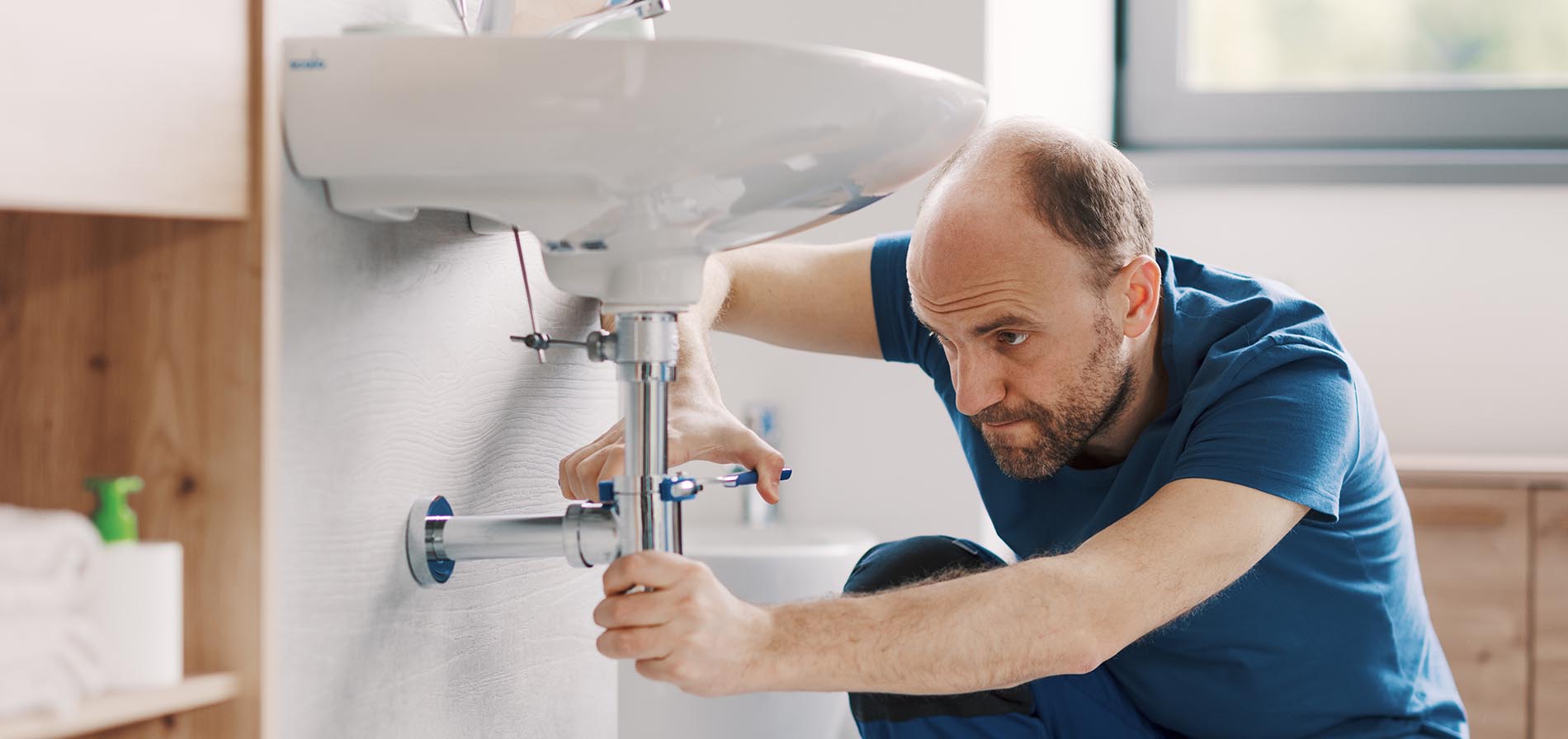
Find out how we manage different types of repairs.
Our aims for repairs
We understand that good quality housing is key to the health and wellbeing of our tenants and their families. Our intent is to ensure that every one of our homes is safe, warm and well maintained, providing tenants with a secure and comfortable place to live. This will be achieved through proactive and planned maintenance programmes of works alongside timely, effective responsive repairs.
- We aim to achieve high standards of customer care and overall tenant satisfaction by ensuring repairs are easy to report, through a range of accessible contact methods and that appointments are available at times convenient for tenants.
- We will take a tenant centred approach, understanding the needs of the tenant and other residents in the household and responding appropriately.
- We will take into account individual circumstances, making reasonable adjustments where required to make the service as accessible as possible.
- We will set clear timescales to ensure that repairs are prioritised and carried out promptly. We will publish our performance against these timescales.
- We aim to deliver a ‘first time fix’, resolving the issues at the first visit. Where this is not possible, we will explain the reasons to the tenant. We will seek to arrange any necessary follow-on work during the initial visit, or as soon as possible thereafter.
- We aim to keep tenants informed throughout the repairs process, with regular updates and reminders.
- Our operatives will have the appropriate training and qualifications to carry out thorough investigations of reported concerns, and to implement the most appropriate repairs or improvements.
- We will clearly explain which type of repairs we will undertake as the landlord and which are the tenant’s responsibility. We will apply a consistent and fair approach when applying and recovering the costs of rechargeable repairs.
- We will ensure staff training and procedures reflect the Repairs policy, and use risk-based methods aligned with Welsh Housing Quality Standards, Housing Health and Safety Rating System and the Equality Act 2010.
- We will continually look for opportunities to improve the service through feedback from tenants.
Types of repair
You may need to report issues for problems with:
- Lighting and electrics.
- Water, boiler, and heating repairs.
- Windows and doors.
- Locks, glazing and fittings.
- Walls, floors, and ceilings.
- Toilets, sinks and plumbing.
- Kitchen units and kitchen sinks.
- Damp, mould, and condensation.
- Gutters and roofs.
- Gates, paths, and garages.
Reporting a repair
You can report a repair by contacting Connect 2 Cardiff (C2C) by
Online Report a repair form
By phone: 029 2087 2087
Once you have reported the repair, you should keep a note of your repair reference number and appointment time. Confirmation and reminders will be sent by text message if a mobile phone number has been provided.
Time slots
Appointments will be arranged Monday to Friday in one of the following 4 timeslots:
- 8:30am to 12:30pm
- 10am to 2pm
- 12:30pm to 4pm (12:30pm – 3:30pm Fridays)
- 8:30am to 4pm (for jobs estimated to take over 4 hours)
Priorities
Once a repair is raised, it will be allocated a priority. There are 4 main priorities:
- Emergency – Attended the same day (we aim to attend within 2 hours).
- Priority Urgent – Attended within 10 working days.
- Urgent – Attended within 15 working days.
- Routine – Attended within 45 working days.
Some repairs fall outside these categories and may be allocated a longer timescale of 6 months as they would not have a detrimental effect on the Contract-holder or the property.
Examples include:
- Fencing
- Large garden works
- Boiler upgrades
Changing an appointment
You can change or cancel a repair by phone or webchat. Please give us at least 24 hours’ notice.
You will need to provide your address and job number and as much notice as possible if you are unable to keep your appointment.
Day of appointment
If the work involves moving furniture or lifting carpets or other floor coverings, you should be aware that this is your responsibility, and you should do this before the operative arrives. It is also a good idea to move any personal belongings away from the work area, particularly if they are fragile.
If you have young children or pets, please make sure that they are kept safe away from tools and the work area whilst the operative works in your home.
You will need to make sure you are at your property to provide access for the operative during the time slot you have chosen.
Your appointment
Every effort will be made to complete your repair during the appointment. However, in some cases an inspection may be undertaken to ensure that we have the correct materials, measurements, and tools to complete the job.
If the repair cannot be completed on the first appointment, the Scheduling Team will contact you to arrange a date for the work to be carried out.
During the appointment, the operative should:
- Ensure the area they are working in is clear.
- Wear shoe coverings (this may not be practical on tiled/wooden/laminate flooring).
- Use dust sheets.
- Work in a neat and tidy manner.
- Remove rubbish and waste from the property when complete, and organise for it to be collected as soon as possible.
What we do
Emergency repairs
We aim to attend all emergency repairs within 2 hours. Emergency repairs include:
- Toilet blockage or toilet unable to be flushed. (Please note- as a temporary measure all working toilets can be flushed by using a bucket of water).
- Serious accidental, storm, or flood damage.
- Serious electrical faults including total loss of power (Meters must be in credit).
- Issues with water supply (Meters must be in credit. Check with provider first).
- Major water leaks.
- Smoke alarm constantly sounding.
- Property that cannot be secured (insecure low-level windows and doors).
- Gaining entry to a property where a Contract-holder is accidentally locked out. (Please note- a charge may be issued in this case).
- Damage to the structure of a property .
If an emergency repair is raised near the end of the working day, it may be passed to the Out of Hours Team or attended the following morning depending on the nature of the repair.
Out of Hours
The Out of Hours service is available for emergency repairs only. This runs from 4pm – 8am on weekdays and 24 hours a day on weekends and bank holidays. For repairs raised outside of normal working hours, we will try to fully rectify the issue, but it may be necessary to make safe pending a full repair.
Damp and condensation
If there is a damp or condensation issue in your home, we will carry out an inspection to find the cause and offer advice on how to alleviate it.
Damp inspections will be carried out by Technical Managers/Officers. Any remedial works will be raised for operatives to complete.
We encourage the use of extractor fans in the kitchen and bathroom to remove excess moisture in the air. Fans will be installed if none are present.
Outhouses and outbuildings are not habitable spaces and should not be used as such.
No work will be carried out to insulate or make outhouses into a habitable space.
Specialist works
Specialist works will be issued directly to an external Contractor to complete, these include:
- Door entry systems.
- TV aerials on blocks of flats.
- Asbestos testing and removal.
Structural works and surveys
If you suspect that there may be structural problems, we will undertake an initial inspection of the property, if structural problems are suspected, a full structural survey will be arranged to identify the work required to rectify the issue.
Any minor structural works will be completed by the Responsive Repairs Unit.
Major structural works will be completed by the Building Improvement Unit.
Any immediately dangerous structural defects will be assessed on an emergency priority and the area made safe in the first instance.
Fire safety
Fire safety works will carried out by trained operatives.
The Compliance Team will complete all Fire Risk Assessments.
Fire Safety work will be carried out as outlined in the fire risk assessments using approved materials and processes.
The Compliance Team will complete intrusive surveys to vacant properties in high rise blocks and sheltered schemes. The works specified in the surveys will be completed as a co-ordinated scheme.
Electrical
Electrical Installation Condition Reports (EICR) will be completed every 5 years or sooner if specified. You will be provided with a copy of the certificate.
Extra sockets will only be provided if there is a Health and Safety issue.
Broken electrical fittings will be replaced but any repairs required due to damage caused by you will be charged.
All works will comply with current legislation.
Asbestos
Asbestos Surveys are carried out by specialist surveyors.
Any asbestos containing materials that are noted while carrying out repair work will be assessed and will only be removed if damaged or deteriorated.
If asbestos is damaged or needs to be removed, a licenced contractor will be used.
Kitchens
Kitchen units will be repaired if unsafe or damaged due to wear and tear. Repairs will not be carried out for cosmetic reasons.
Individual items will be renewed in the matching colour (if possible) or the nearest colour/shade.
Any kitchens that have not been upgraded will be passed to the Building Improvement Unit for inclusion to their upgrade list.
Extra kitchen units will not be provided.
Cooker spaces are standard width as specified in Welsh Housing Quality Standard (WHQS). Openings will not be altered to accommodate larger appliances.
Extractor fans will be installed where they are not already fitted.
Slip resistant flooring will be used where replacement is required.
Damaged tiles will be matched to the nearest colour/shade. Only affected tiles will be replaced. Tiles will not be matched in areas that are not visible e.g., under appliances.
Repairs required due to damage caused by you will be charged.
Bathrooms
Bathroom fittings will be repaired if unsafe or damaged due to wear and tear. Repairs will not be carried out for cosmetic reasons.
Chips to bath enamel will be repaired.
Any bathrooms that have not been upgraded will be passed to the Building Improvement Unit for inclusion on to their upgrade list.
Adapted showers will not be replaced with a bath.
Requests to replace baths with walk-in showers will be referred to an Occupational Therapist to assess.
Slip resistant flooring will be used where replacement is required.
Where there is significant damage to flooring, it will be replaced with sheet type flooring.
Repairs required due to damage caused by you will be charged.
Disabled adaptations
Repairs and maintenance to specialist equipment or adaptations will be referred to Disabled Facilities Services.
Non-specialist equipment will be repaired as required by Responsive Repairs.
Walls and decoration
If damage to the wall is discovered while redecorating, you are responsible for removing the wallpaper from the affected area before an inspection is carried out.
Any blown render/plaster or large cracks will be repaired in sections as required. Whole walls will not be skimmed at your request.
Any minor cracks or holes are your responsibility to repair prior to redecoration.
Walls are to be of a standard that is suitable for wallpaper to be hung. They will not be repaired to a standard to allow them to be painted.
Areas of damage caused by property issues (e.g water damage due to a leak from neighbouring property) will be repaired. This will be matched to existing decoration as closely as possible. In all other instances, decoration is your responsibility.
Flooring
Flooring in the kitchen and bathroom will be renewed if damaged through wear and tear or where there is a safety concern.
Flooring in kitchens and bathrooms will be slip resistant.
Flooring in other areas will not be renewed as this is your responsibility.
Laminate flooring should not be fitted in flats above the ground floor.
You are responsible for removing laminate flooring or carpet before works are carried out. No liability for damage to the flooring will be accepted by Cardiff Council.
Woodwork and joinery
You are responsible for all woodwork decoration.
Staircases will be repaired due to wear and tear through normal use or damage caused by timber rot.
Doorframes will be replaced due to wear and tear through normal use or timber rot.
Existing doors will be rehung.
You are responsible for the repair or renewal of internal doors to the property.
Windows and external doors will be repaired rather than replaced where possible.
Repairs required due to damage caused by you will be charged.
Boilers and heating
Servicing of gas boilers will be carried out annually and any required repairs will be completed at that time.
Boilers or heating controls will be repaired rather than being replaced where possible.
A Gas Engineer will decide if an upgrade is needed and its priority for completion.
Boilers will not be moved at your request.
Boilers will not be exchanged due to high running costs if you have an ‘A’ rated boiler.
Radiators will not be repositioned at your request.
Radiators will be replaced if they do not work, leak or for Health and Safety reasons. They will not be replaced for cosmetic reasons.
If you experience any issues, we can provide advice on controlling your heating systems efficiently.
Gardens
You are responsible for maintaining your gardens.
Only damaged sections of fencing will be repaired. This will be on a like for like basis.
All fencing will be sited on the boundary between properties.
New fencing will not be installed where there was none previously.
Garden paths will be repaired in sections – only sections that are damaged will be repaired.
Cracks in paths will only be repaired if they cause a trip hazard.
If existing patios or decking require repairs, they will only be undertaken if they cause a Health and Safety hazard. The repairs will only be carried out to remedy the hazard. Where it is more cost effective, the patio or decking will be removed.
Our policies
- Cardiff Council Homes Damp and Mould policy
- Cardiff Council Homes Decant policy
- Independent Survey procedure
- No Access procedure
- Repeated Damp Repair Request procedure
- Reporting Property Condition and Fit for Human Habitation (FFHH) procedure
- Rechargeable Repairs policy
- Repair Responsibilities
- Repair Priority and Cyclical Maintenance
- Tenants own Improvements
- Tenants with Additional Needs and Reasonable Adjustments
- Quality Assurance and Monitoring of Works
- WHQS Requirements on Responding to Hazards
As a landlord, we are committed to keeping our homes in a good state of repair.
Some repairs are our responsibility as the landlord, and some are the tenant’s responsibility. Undertaking repairs to ensure the property is safe, secure, in good repair and structurally sound is our responsibility, as is carrying out regular safety checks. Following the repair, we will ensure that the area is left in a clean and tidy condition.
Tenants are responsible for carrying out minor day‑to‑day maintenance tasks within their home, where these do not relate to structural, safety or statutory landlord responsibilities. Tenants are also responsible for the ongoing decoration of their home. Further detail and examples of tenant’s responsibilities are set out in the Repair Responsibilities Document.
Most repairs are carried out by our inhouse workforce of qualified tradespeople.
We also employ trusted contractors to carry out some works:
- To help with demand at busy times
- To carry out specialist work that the inhouse teams may not be able to do such as communal door entry system repairs or asbestos removal.
- For electrical testing.
We set high service standards for both the inhouse and contracted workforce and carry out regular inspections of their work.
We aim to ensure that tenants can easily access the repairs services, through multiple channels of communication.
We encourage tenants to report repairs promptly, as soon as they notice any issues.
Repairs can be reported by telephone via Connect 2 Cardiff (C2C) on 029 2087 2087. Tenants can also report a repair by using one of the free phones within the local Hubs. Staff at the Hub can support tenants to make the call if required.
The regular opening hours when tenants can report repairs by telephone to C2C are:
- Monday to Friday – 8:30am to 6:00pm.
When a tenant telephones to report a repair, we aim to book a convenient appointment straight away, while they are on the phone. Where this is not possible a repairs scheduler will contact the tenant as soon as possible to book the repair.
Webforms can also be completed at any time to raise a repair for Urgent and Routine repairs. Emergencies must be reported by telephone. If tenants are not sure how to do this, they can go into a Hub and staff can provide help. The webform can be completed on a smartphone or computer by accessing Repairs to your house – Cardiff Council Forms
If the tenant has an emergency outside of the opening hours, of C2C, they will still need to call 029 2087 2087 but their call will be put through to the Out of Hours team. The ‘Out of Hours’ emergency service is available in the evening, at weekends and on bank holidays to respond to emergency repairs. If the repair issue is not considered an emergency, it should be reported through one of the standard reporting options outlined above and tenants will normally be asked to call back on the next working day to schedule an appointment.
Access to the repairs service will be available in Welsh as well as English. For those tenants with other language needs, Language Line is available.
The following appointment slots for repairs will be offered from Monday to Friday:
- 08:30 – 12:30
- 10:00 – 14:00
- 12:30 – 16:00 (12:30 – 15:30 Fridays)
- 08:30 – 16:00 (for jobs estimated to take over 4 hours)
The tenant will be kept informed about their repair through telephone calls and text messages. Reminders about the date and time of the repair appointment will be sent by text. For repairs scheduled with the inhouse workforce and where we hold a current mobile telephone number for the tenant, they will receive a text message:
- When the repair appointment has been arranged with C2C.
- The day before the repair appointment is due to take place.
- When the operative is on their way to the repair appointment.
For repairs that are with contractors, reminders about the date and time of the repair appointment will be sent by text.
If the tenant is unable to keep an appointment and would like to change or cancel, they should notify the Council by calling C2C at least 24 hours before the appointment is due to take place. However, tenants are encouraged to provide as much notice as possible if they need to make changes to their appointments.
Where the tenant or any of their household have additional needs, for example health issues, disabilities or language issues, we will work with them to ensure appropriate advice, assistance and support are provided throughout the repair process and adjustments are put in place to meet their needs.
For further information on how we support tenants, please refer to the Tenants with Additional Needs and Reasonable Adjustments document.
It is essential that operatives are able to access the property so they can complete the required works and ensure the tenant’s home remains safe and comfortable. Missed appointments place pressure on the service, as they use valuable resources and delay repairs for other tenants. Allowing Operatives access to complete repairs, benefits both the Council and tenants by helping us deliver repairs efficiently and maintain a reliable service for everyone.
Where an Operative is unable to gain access to a property at the scheduled appointment time, the Council follows a standardised no access procedure to ensure fairness, accountability and consideration of tenant needs.
Operatives will make multiple attempts to contact the tenant on the day of the appointment, using the tenant’s stated communication preferences. Reasonable adjustments will be applied where tenants have additional needs. If access is still not achieved, the Operative will record the no access attempt with photographic evidence and leave a calling card at the property advising the tenant how to rearrange the appointment.
A clear No Access procedure is in place which sets out the action that is taken following a no access visit, this depends on the priority of the repair and whether it is a statutory requirement; the potential health and safety risk to the tenant and the risk to the property. All no access appointments are risk assessed taking into account these factors and action is taken as appropriate.
Outcomes of the No Access risk assessment may include:
- Closing the repair (the tenant will then need to re-book the repair through C2C)
- Rebooking the appointment, this will be done routinely in any case where a health and safety risk to the tenant or a risk to the property has been identified. The number of times the appointment is rebooked will depend on the level of assessed risk.
- Escalation to Tenancy Management or Case Management teams.
- Safeguarding checks / referrals.
- Applying charges where criteria are met.
Health and safety related works include Fire Safety, Gas, Electrical, Target Hardening, Damp and Mould, Disrepair and Fit for Human Habitation cases.
For full details, please refer to the No Access procedure.
Repair Priorities
We categorise reported repairs based on their urgency. The priorities are as follows:
Emergency
Definition
These are repairs that pose an immediate danger to a person or where there is a serious risk of damage to the property.
This aligns with the WHQS definition – A hazard which may present a significant risk with an assessed likelihood of imminent harm.
Timescale
We aim to attend most emergency repairs to make safe within 2 hours from the time the repair is reported. In any case, we will attend within 24 hours.
We will work to eliminate all potential risk of harm and remedy any dangerous situation as soon as possible. Once made safe, any follow-up work will be arranged according to the timescales set in this policy.
On occasions, it may not be possible to remedy a hazard within timescale. In this case, a written summary plan will be provided to the tenant within 5 working days.
During very busy times, we will prioritise repair requests based on urgency and explain this to tenants when they report the repair.
Priority Urgent
Definition
A hazard which presents a significant risk with no assessed likelihood of imminent harm.
We will address the issue more promptly than other urgent repairs which do not represent a hazard.
Timescale
We will investigate the hazard within 10 working days and aim to remedy the issue within a further 5 working days.
On occasions, it may not be possible to remedy a hazard within timescale. In this case, a written summary plan will be provided to the tenant within 5 working days.
Advice may be given on steps to reduce any potential risk at home, such as not using the item, or temporary heating may be provided while the tenant waits for an operative or for the issue to be fully resolved.
Urgent
A repair which does not present a significant risk and where there is no assessed likelihood of imminent harm.
Urgent repairs are medium priority. While there is no significant risk to the tenant or household, we need to address this more urgently than a routine repair.
Timescale
Works are usually carried out within 15 working days.
Advice may be given on steps to reduce any potential risk at home, such as not using the item, or temporary heating may be provided while the tenant waits for an Operative to attend or for the issue to be fully resolved.
Routine
A repair which presents a low risk with no assessed likelihood of harm.
Routine repairs are non-urgent. These types of repairs mean that the tenant is safe in their home, and we can schedule repairs at a later date. Routine repairs are day-to-day repair works which are not prioritised under Emergency or Urgent repair categories.
Timescale
These are usually completed within 25 working days; however, due to the high number of repairs at present, this has been temporarily changed to 45 working days.
Planned Priority Upgrades
These are repair works that are planned and carried out to keep items in good order or to replace items that have broken down. From time to time, and in order to maximise the resources available, certain types of repairs may be scheduled to be undertaken as part of a planned programme.
For larger weather dependent external works, the Council may ‘make safe’ and complete the full repair in spring or summer to reduce failed visits and support better communication and resource planning.
Timescale
These should be completed within 9 months.
For further detail and examples of repairs under each repair priority, please refer to the Repairs Priority and Cyclical Maintenance Document.
Quality of the Repairs Service
Repairs will be completed to a high standard, on the first visit where possible to avoid inconveniencing the tenant. Where this is not achievable the operative must attempt to book a date for any follow on works while at the property with the tenant.
Our operatives are expected to behave professionally at all times when attending tenants’ homes. This includes:
- Showing identification when attending appointments
- Being polite and respectful
- Wear shoe coverings if requested by tenant
- Providing clear explanations of the works being carried out, including reasons if a job cannot be completed
- Treating tenants, their homes and belongings with care
- Avoiding unnecessary noise or disruption
- Asking permission before using facilities such as toilets or electricity
- Leaving the property clean, safe and tidy after completing works
Operatives will be required to complete Equality, Diversity and Inclusion training ensuring tenants are treated fairly, with dignity and respect.
Damp, Mould and Complex Repair Cases
We understand the impact that damp and mould can have on the health and wellbeing of our tenants and their families and we take a proactive approach to damp and mould, working to prevent it before it develops and responding quickly and effectively when issues arise.
- Prevention is prioritised through investment in maintenance programmes, upgrades such as insulation and ventilation systems. We carry out full programmes of work when properties are empty and set high standards for our new‑build homes.Reports of damp and mould and more complex repairs are coordinated by a Case Management Team to ensure all works are completed in a joined‑up and timely way, supported by regular monitoring and management oversight.A Damp and Mould leaflet is provided to tenants offering advice and guidance on how to help prevent damp and mould in the property.
- Our Dry Homes team provide specialist services to address damp in our homes, using the latest technology to identify the causes of damp and resolve them.
- When a tenant reports damp and mould, the case is triaged using structured risk‑based assessments to ensure swift action where health risks are highest. Inspections are then carried out by HHSRS qualified staff, the assessment takes into account the needs of the household including any health issues, heating, ventilation, structural integrity and potential sources of moisture.
- Cases of damp and mould are prioritised carefully to determine the urgency of the case and they are categorised as follows:
- Red – Severe RiskWhere a hazard may present a significant risk with an assessed likelihood of imminent harm.Cases are inspected within 24 hours and remedied within a further 24 hours. If the hazard is not remedied within timescale a written Summary Plan is provided within 5 working days.
-
- Amber – Moderate RiskWhere a hazard may present a significant risk with no assessed likelihood of imminent harm.Cases are inspected with 10 working days and remedied within 5 working days. If the hazard is not remedied within timescale a written Summary Plan is provided within 5 working days.
-
- Green – Minor RiskWhere a hazard presents a low risk with no assessed likelihood of harm.Inspections are carried out within 25 working days.
- We may commission an independent surveyor to inspect a property where issues are persistent, complex or disputed.
Repeated Damp Repair Request Procedure
- We ensure that any damp or mould problem reported in the same location within a 12-month period is identified, reviewed and escalated appropriately. This includes checking previous works carried out and arranging a further inspection where needed.The individual circumstances, additional needs and health issues of the tenant and their household will also be reviewed and updated.
- For more information, please see the Cardiff Council Homes Damp and Mould Policy.
There may be certain situations where an independent survey is required. This may include instances where additional expert advice is required such as when remedial works for damp and mould have been undertaken but the problem has re-occurred or proves difficult to address. It may also be appropriate to employ an independent surveyor where a tenant disagrees with the council’s decision.
For further details see the Independent Survey procedure.
We are committed to ensuring that all repairs are completed to a high standard of quality, safety and compliance. Quality assurance and monitoring is carried out regularly and includes the following:
- Oversight includes diagnostic inspections carried out in advance of works where appropriate to accurately determine the nature of the repair, the appropriate solution and the resources required.
- Regular inspections are carried out of both ongoing and completed repairs. This applies to both the in‑house operatives and external contractors.
- Regular review of service performance against key targets is carried out and reported as part of corporate monitoring arrangements.
- Customer feedback and learning from complaints are also used to monitor performance.
Findings are used to identify trends, inform service improvements, support workforce development and strengthen accountability, ensuring a consistent and reliable repairs service for tenants.
Inspection Visits
While Operatives will carry out first time fixes if possible, there may be instances where repairs are difficult to diagnose via phone calls or after being reported through email or via Web Forms. In these instances we will need to conduct inspection visits. These visits are essential to ensure that repairs are accurately assessed and promptly completed.
Examples where inspections maybe required:
- Difficult to diagnose repairs
- Structural damage to property or walls
- Reports of damp/mould
- Reports that the property is not fit for human habitation
- Repair requests for Plastering
- Repair requests for Roofing
- Repair requests for external brickwork or concrete for example paths
Whenever possible we will let the tenant know that an inspection will be needed before the works can be carried out.
Further information about how we carry out quality assurance is available in our Quality Assurance and Performance Monitoring document.
Where a tenant and their household are not able to stay in a property while repairs are carried out, the provision of temporary accommodation will be considered. The decant process is the approach we will use when a tenant must temporarily move out of their property because essential works cannot be safely or reasonably carried out while they remain in their home. A Decant Panel made up of senior housing officers and relevant staff considers the nature of the works, any safety risks, and the individual needs of each household member before deciding whether a decant is required. Once agreed, a dedicated Officer is assigned to each household to provide clear information, practical help, and ongoing communication throughout the move.
Where a decant is approved, the Council arranges suitable temporary accommodation and ensures tenants are not financially disadvantaged, offering support with removals, utilities, and essential costs. Additional assistance is available for households with extra needs, including help with packing, accessibility arrangements, and phased moves. Once works are completed, tenants are required to return to their principal home, with further support provided to ensure the transition back is safe and manageable.
For full details, please refer to the Cardiff Council Homes Decant policy.
Permission must be obtained before starting work on any alteration to the building to ensure all necessary approvals, such as Planning and Building Regulations, are in place.
Tenants must obtain written permission before starting any work. To request permission, tenants should contact Tenancy Management by calling 029 2053 7501, emailing tenancymanagement@cardiff.gov.uk or visit any of the Hubs, where an application form will be issued. A list of the Hubs can be found here.
Once a completed application has been received, permission will be considered and the tenant will be informed of the outcome.
Gas work must be carried out by a Gas Safe registered contractor, and electrical work by NICEIC or equivalent-registered professionals. Original certificates must be provided to us upon completion.
Structural work will be post inspected. If a tenant carries out any alterations without permission, or if an alteration does not meet the required standards, the tenant will be liable for any repairs or reinstatement needed, and we may return the property to its original condition at the tenant’s expense.
In some limited circumstances, retrospective consent may be possible after a full inspection is carried out by a Technical Manager.
Further information about when we need to carry out an inspection before any work takes place is available in our Tenants Own Alterations procedure.
Some of the Council’s homes have been adapted to meet the needs of tenants who have a disability, including features such as level access showers and grab rails.
We are committed to providing homes that cater to the needs of our tenants, particularly those who may require adaptations. If adaptations are required, the tenant should contact the Rehousing Solutions Team, who can provide advice on whether there is more appropriate accommodation to suit their needs.
Tenants can also self-refer for an adaptation by contacting the Occupational Therapy team.
- An adult with a disability – 029 2023 4222
- A child with a disability – 029 2053 6490
Maintaining Specialist Equipment
Care & Repair is a specialist contractor who provide some of the adaptations and repairs to our properties.
We may instruct Care & Repair to undertake specialist repair works to adapted bathroom facilities, where such works require technical expertise, beyond the scope of the in‑house workforce or appointed contractors. This includes repairs, adjustments or replacements to adapted showers, toilets, wash‑dry systems, seating, grab rails and associated fixtures installed to meet assessed needs. This provision ensures that existing adaptations continue to meet statutory obligations and support the tenant’s health, wellbeing and independence in their home.
Care and Repair also organise regular checks of mechanical equipment provided such as through floor lifts and stair lifts which we have installed in
Council properties. Completion of these checks is monitored regularly
We are committed to ensuring that any repairs identified as a health or safety risks are managed quickly and in line with our standards, policies, and procedures. This includes:
- Asbestos Management Plan
- Electrical Safety policy
- Fire Safety Plan
- Gas Safety policy
We are committed to ensuring the health and safety of the in-house workforce. In certain circumstances repair work may be postponed until it is safe to proceed. This may include situations where the condition of the property makes it unsafe to work in. Operatives will also refuse to enter a property where a child is present on their own, a safeguarding referral may be made in this case.
Health and Safety Checks
Gas Safety
We are legally required to carry out gas safety inspections to make sure all gas pipework and council-owned appliances, such as boilers, are safe. The inspections include checking that smoke alarms and carbon monoxide detectors are installed and functioning. These checks take place when a tenant moves in and continue regularly throughout their tenancy, including yearly inspections of Council-owned gas appliances.
Electrical Safety
We have a duty to carry out electrical safety checks and make sure all electrical installations in our properties are safe for everyone. We test the electrical systems at least every five years, and whenever a property is empty, we make checks and rectify any issues before a new tenant moves in. Regular testing continues to help us stay compliant with legislations and keep tenants safe.
Where Mechanical Ventilation Heating Recovery unit’s are installed filters are changed as per manufacturer’s instructions and smoke detectors checked for operation.
Both gas and electrical tests are provided free of charge. Tenants must allow access to their homes for these safety inspections after receiving the appropriate notice, and we will work with tenants to arrange convenient appointment times.
If tenants do not allow access, it may be considered a breach of their occupation contract, and we may need to take further steps to fulfil legal requirements and keep everyone safe. For further details about safety checks, servicing, and related procedures, please refer to the Repairs Priority and Cyclical Maintenance document.
Asbestos
We have carried out asbestos surveys on our properties and recorded the outcome. Operatives are able to access this information whenever required through the asbestos database. Most asbestos in our properties has been recorded as low risk and is safe if it is not disturbed. When dealing with asbestos we will ensure that:
- Any asbestos noted will be checked to make sure it is on the property asbestos survey and if not an updated survey will be arranged of the property or area where the work is being carried out. A copy of the survey will be used to update the asbestos database.
- Any materials in the property that contain asbestos are noted by the operative before carrying out responsive work, these will be assessed and will normally only be removed if damaged.
- Where asbestos that is damaged or needs to be removed this will be completed by a competent approved asbestos contractor and the asbestos database will be updated to show that the asbestos has been removed.
- All repairs staff and operatives receive annual UKATA Asbestos Awareness training
Fire Safety
All works to properties will be carried out by competent individuals and with fire safety in mind. Our approach to fire safety is set out in our Fire Safety Management Plan.
The Council operates a cyclical maintenance programme to ensure ongoing compliance with safety and quality standards. Some examples are maintenance of lifts, fire alarms and sprinklers.
For further information about Cyclical Maintenance, please refer to the Repairs Priority and Cyclical Maintenance Document.
Monitoring Compliance Checks
Regular reports are produced to monitor compliance with the required health and safety checks including gas servicing, electrical testing and fire safety. These reports are considered by senior managers appropriate action taken to remedy any issues.
Property Condition and Fitness for Human Habitation
We are dedicated to keeping homes in good repair and making sure it is always fit to live in. We do this through a mix of responsive repairs, regular compliance checks, and planned maintenance programmes of work. When a property becomes empty, we inspect it to make sure it meets a high standard before a new tenant moves in. We also carry out routine visits after the tenant has moved in, to identify any repair needs and check the property condition. If we find any issues during these visits, we record them and deal with them according to our policy and the Welsh Housing Quality Standards.
If tenants are concerned about the condition of their home, they can make a request for an inspection. If they feel their property is not fit for human habitation they may withhold their rent until any issues are resolved.
We encourage all our staff members to proactively report poor property condition. For further information please see the Reporting Property Condition and FFHH procedure.
We view complaints as a valuable opportunity to continuously improve our services. We take any feedback seriously and use it to identify recurring issues, emerging trends, and areas where the repairs service can be enhanced. A dedicated team of officers respond to complaints about the services provided by Cardiff Council Homes. Where the complaint is upheld we will offer a full apology and set out how we intend to remedy the issues raised, including consideration of financial redress as set out below.
Tenants can make a complaint by emailing the Complaints team at housingcomplaints@cardiff.gov.uk or by calling C2C on 029 20872087.
Regular reports on complaints received about the repairs service are produced by senior managers to consider trends and any corrective action needed.
It is important for tenants to ensure that the contents of their homes are properly insured. Tenants are responsible for any loss or damage to their home due to incidents such as theft, flooding, fire, or accidental damage. Additionally, tenants may be held responsible for damage caused to neighbouring properties resulting from such events.
Home contents insurance is not included in a tenant’s rent payment to Cardiff Council Homes. Further information about home contents insurance can be found on the Council website – Home contents insurance – Cardiff Council
Cardiff Council is committed to promoting equal opportunities through our policies and strategies, and in providing equal access to all our services. We are also committed to making sure people have equal opportunity to fulfil their potential.
Discrimination on grounds of race, nationality, ethnic origin, religion or belief, gender, marital status, sexuality, disability, or age is not acceptable. The Council will tackle inequality, treat all people with dignity and respect, and work to improve services for all.
As a bilingual organisation, we have legal responsibilities relating to the Welsh Language Measure 2011. All documentation will be available in both Welsh and English, and alongside this, advice and support for tenants will also be available in Welsh. Information will be provided in accessible formats and other languages where required.
The legal framework is provided by the Equality Act 2010 and the Public Sector Equality Duty.
Further details can be found on the Cardiff Council website.
A Single Impact Assessment has been carried out.